Accessing The Archive: Charles “Teenie” Harris And The Power Of Preservation
The Carnegie Museum of Art (CMOA) remains committed to preserving and sharing the cultural and artistic heritage of diverse communities. One of the museum’s most recent undertakings has been digitizing the Charles “Teenie” Harris Archive an expansive, vital record depicting African American life in the Hill District (Pittsburgh, PA), through photographs, film, and prints. Through careful preservation, community collaboration, and technological innovation, this project keeps Harris’ legacy alive to educate and inspire future generations.
The Man Behind The Camera
-
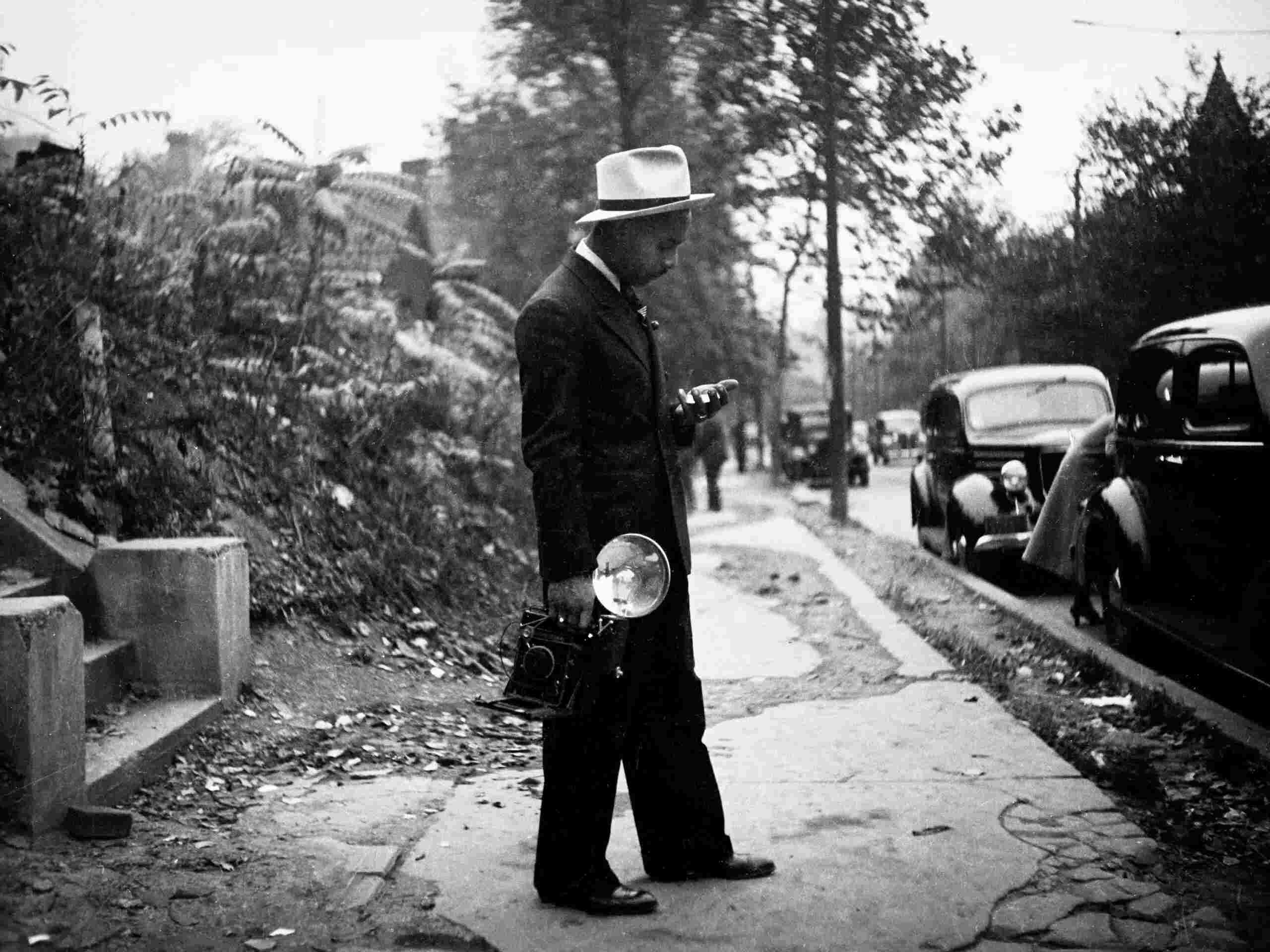
Photographer Charles “Teenie” Harris stands on a sidewalk holding his camera in Pittsburgh, ca 1938.
Charles “Teenie” Harris (1908–1998), one of the most prolific Black photographers of the 20th century, created a visual chronicle of African American life during his decades-long career as a photojournalist for the Pittsburgh Courier between 1935 and 1975. The Courier was one of the most influential Black newspapers in the United States, known for its singular, powerful voice in advocating for civil rights, desegregation, and racial equality.
As a photojournalist for the paper, Harris understood the necessity of celebrating the working class. He preserved the spirit, dignity and resilience of Black communities largely ignored or misrepresented in mainstream media. Harris chronicled events ranging from community parades and church services to major civil rights demonstrations and visits organized by leaders like Martin Luther King Jr. and Malcolm X. Harris’ unique ability to make his subjects feel seen and respected allowed him to authentically photograph people in vulnerable, joyous, and unguarded moments.
An Image In Motion
On June 12, 1998, just shy of his 90th birthday, Harris passed away from a heart attack. Honoring Harris’ longstanding wish, CMOA acquired the full collection of his work in 2001 from his family. This acquisition aligned with the museum’s mission to serve as a public trust- locally rooted and globally connected.
In 2011, the museum hosted its first exhibition of Harris’ work entitled “Teenie Harris, Photographer: An American Story,” with public programming and the launch of an accompanying website. A smaller version of the exhibit traveled nationwide during 2013. Today, the Harris Archive includes a permanent gallery and a robust digital platform, making over 75,000 images accessible online.
-
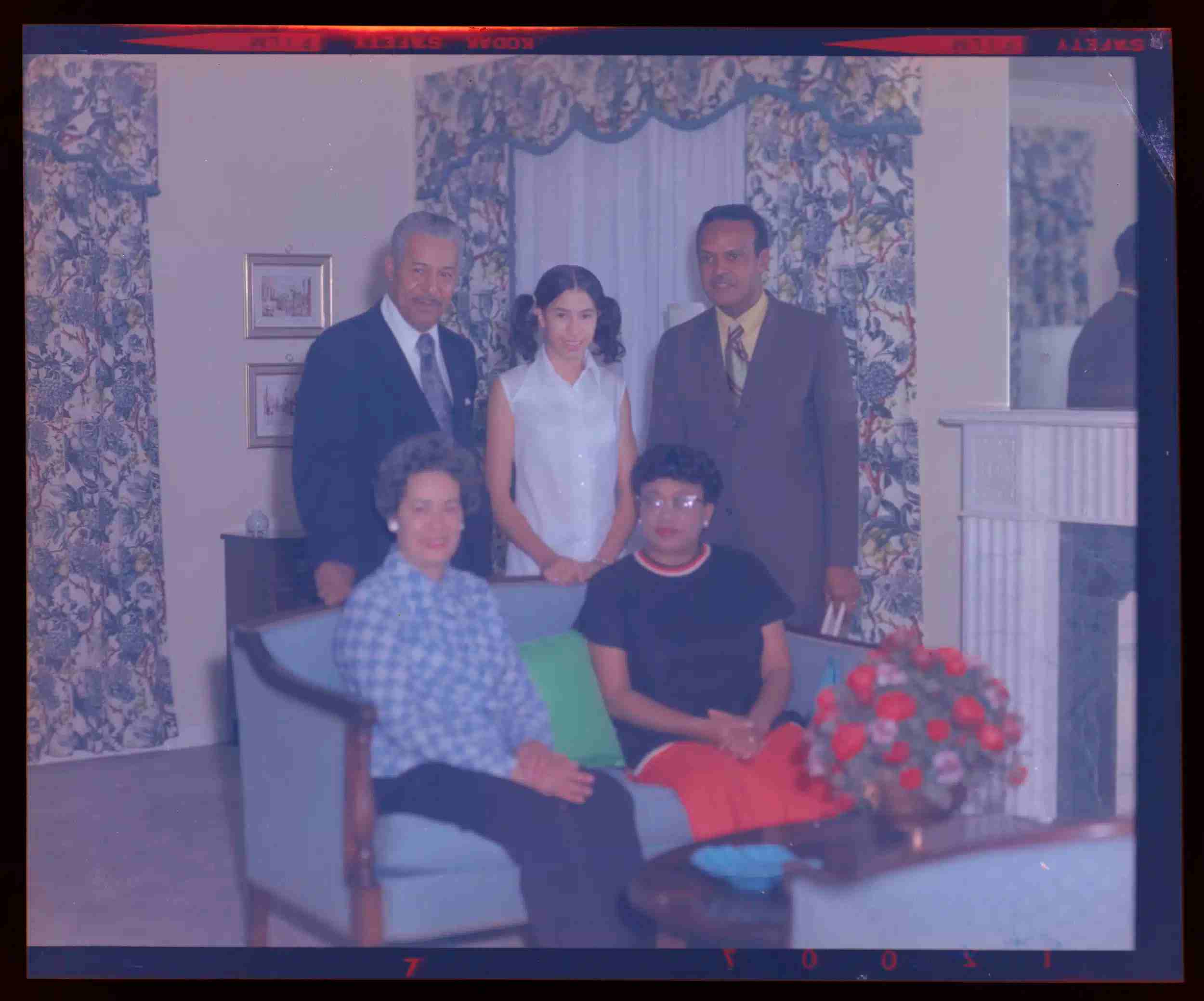
Bishop Charles H. Foggie, Madeline, and daughter Charlene pose with Deans Olivia and A. McClean Spaulding at right. Pittsburgh, Pennsylvania, c. 1970
The staff at CMOA has shown a deep commitment to preserving both the legacy of Harris and the integrity of his work. The museum has taken proactive steps to ensure the collection’s longevity- primarily through digitization efforts that safeguard the work against natural deterioration caused by moisture, heat, or chemical exposure. Through its commitment to access, education, and preservation, CMOA demonstrates a deep ethical integrity by respecting Harris’ cultural significance and ensuring the collection is transparently managed. This thoughtfulness reflects a sincere alignment with the museum’s mission and a clear respect for Harris’ artistic vision.
Strategic Collaboration
The digitization process was both technically complex and logistically challenging. Although the museum began digitizing in-house in 2007, CMOA later partnered with The Crowley Company, based in Frederick, MD, in 2024 to digitize the remaining collection when funding became available from the National Endowment for the Humanitites.
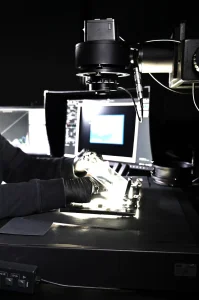
A modest team of three experienced professionals at Crowley used high-resolution overhead cameras to carefully process, scan, and digitize: 14,000 4 x 5 grayscale negatives; 14,000 35 mm color strip images; 2,800 full color strips; and 200 4 x 6 color archival prints. To ensure authenticity and flexibility, two versions of each image were created- an untouched archival TIFF and a minimally edited, properly oriented version. All files were transferred to CMOA using external drives then securely stored on museum servers and backed up off-site to ensure their long- term preservation. After digitization, the images were integrated into CMOA’s digital asset management system and linked to the Content Management System (CMS) to streamline data and provide a solid foundation for public access. Quality control was rigorously maintained through detailed manifests and regular batch reviews.
-
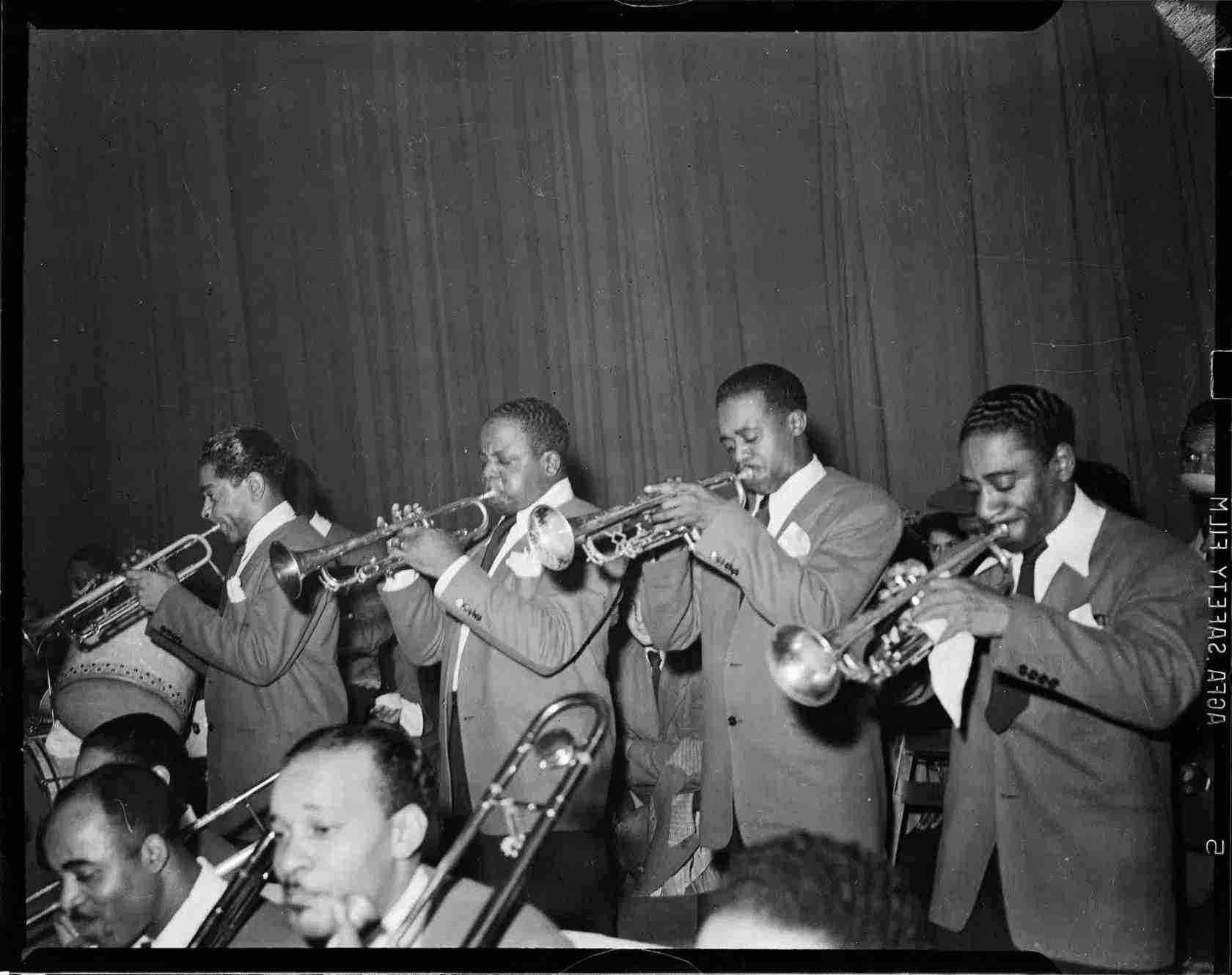
Brass section of the Billy Eckstine Orchestra, performs at Hill City Auditorium (Savoy Ballroom), Pittsburgh, October 1944.
In collaboration with Crowley, CMOA implemented the best practices in digital preservation, including capturing and storing archival-quality file formats. Project manager Allison Cook shared that seeing the files uploaded “brought things full circle for everyone involved on Crowley’s side,” making the work especially rewarding. Crowley’s contribution went far beyond technical execution; their deep specialization in cultural heritage digitization brought a level of scalability and strategic insight that significantly strengthened CMOA’s archiving process. Their ability to seamlessly integrate with the museum’s workflow and uphold rigorous preservation standards speaks to Crowley’s dynamic leadership. By partnering with a firm that understands both the nuances of archival material and the demands of public accessibility, CMOA ensured that their digitization efforts not only met professional benchmarks but also set a strong precedent for future collaborative projects of this scale.
Digitization As Cultural Resonance
Making the collection digitally accessible has greatly expanded its impact. Yet, the digitization of the Charles “Teenie” Harris archive represents more than a technical accomplishment— it marks an important cultural milestone. It preserves the heritage of Black Americans in the 20th century while also challenging how photography defines memory and truth. As the archive’s digital presence expands, it continues to draw in a wider and more diverse audience. In the words of CMOA’s Community Archivist, Charlene Foggie-Barnett, “I always say, ‘Thank God for Teenie because with his photos what you see is the truth.’” As new layers of meaning continue to emerge, the archive functions not only as a historical record, but as a living cultural resource.