The Benefits of Choosing Preservation-Grade Hardware
Preservation-grade is more than just a marketing phrase.
Not all scanners are equal, and treating archival digitization hardware as a commodity purchase is where preservation programs run into trouble. Institutions shopping for preservation grade scanners for cultural heritage, government records, or institutional archives, “good enough” isn’t enough.
Preservation-grade is a term that often appears in archival conservation, but it can also apply to digital preservation. The word preservation means keeping something safe from harm and in its original state. In conservation, preservation-grade materials and techniques do this by protecting, storing, or displaying items for long-term stability and minimal deterioration.
Digital preservation aids this by reducing the handling of fragile items or visualizing an object’s deterioration rate.
So how can we determine whether a piece of hardware is preservation-grade? There are three measurable factors we can evaluate.
- Consistency
- Reliability
- Longevity
These three elements, and how they affect real-world digitization, help us decide if the equipment we choose is truly up to the task. This applies whether you are choosing book scanners, overhead systems, microfilm scanners, or large-format equipment.
Consistency: Repeatable Quality at Scale
Preservation isn’t about producing one beautiful image—it’s about achieving the same high standard, image after image, across entire collections and over many years. True preservation-grade consistency means that every scan, regardless of when it’s made or who operates the equipment, matches the required quality benchmarks.
Key elements that define repeatability and consistency in preservation-grade digitization include: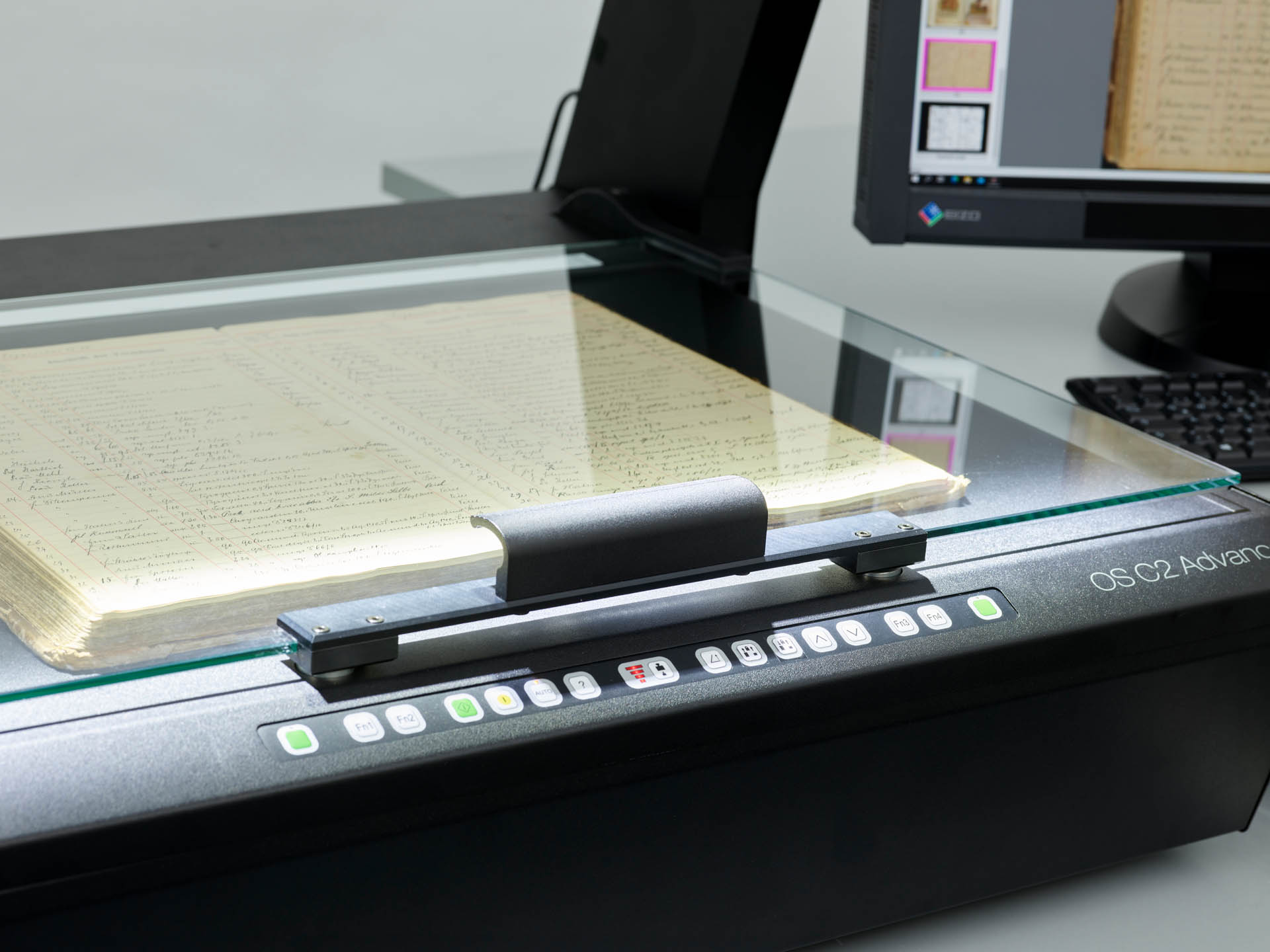
- Uniform lighting and color balance across batches: Regardless of project length or day-to-day changes, the hardware must deliver the same illumination, color accuracy, and tonal balance from the first scan to the last.
- Stable focus and sharpness across different material types: Whether digitizing thin onion skin paper, glossy photographs, or heavy bound volumes, the system should maintain reliable focus and detail capture throughout.
- Accurate color capture with calibrated systems: Regular calibration to ICC standards ensures that color reproduction does not drift over time or between operators, protecting the integrity and comparability of digital collections.
- Consistent output regardless of operator: The system should minimize the impact of human error, with automated calibration, guided workflows, and user-friendly interfaces that produce identical results even as staffing changes.
- Reliable file naming and metadata embedding: Preservation-grade systems often support automated file naming conventions and metadata capture at the point of creation, supporting long-term management, discoverability, and data integrity.
Why It Matters
Repeatable, consistent image quality is foundational for:
- Reducing costly and time-consuming rescans, which expose fragile materials to unnecessary handling
- Supporting accurate metadata creation and reliable OCR, which depend on uniform input quality
- Enabling true comparability of images across projects, batches, and years—critical for longitudinal studies or re-digitizing projects
- Meeting grant, accreditation, and regulatory requirements that demand auditable quality control
- Scaling up to large institutional initiatives, like microfilm conversion or mass digitization, where even small inconsistencies can compound into major issues
Ultimately, consistency is what ensures that today’s digitization efforts remain trustworthy, usable, and valuable for decades to come.
Reliability: Built for Production, Not Occasional Use
Many institutions start digitization with office or photo equipment instead of dedicated archival scanning equipment. While these systems can be effective for occasional or small-scale projects, they often lack the durability and resilience needed for large-scale, ongoing digitization initiatives. In production environments, these limitations become apparent as equipment struggles to handle higher volumes, longer operating hours, and demands for consistent results.
Preservation-grade reliability is about more than just keeping a scanner running. It’s about ensuring operational continuity, minimizing risk, and supporting long-term preservation goals. Key hallmarks of reliable, preservation-grade hardware include:
Preservation-grade reliability means:
- Designed for extended daily operation
- Stable performance across shifts
- Serviceable and replaceable components
- Manufacturer-backed support
- Actively maintained capture software
When evaluating reliability, it’s important to ask practical questions:
- Is this system built for continuous daily use?
- Are parts and service available for the expected lifespan of the equipment?
- Does the software receive regular updates?
- Is the platform engineered for handling archival materials?
Downtime isn’t just inconvenient, it directly impacts access for researchers, increases labor costs, postpones project milestones, and can even jeopardize grant funding or compliance with contractual deliverables. Reliability, therefore, is not a luxury, it’s a requirement for any preservation-grade digitization effort.
Longevity: Aligning Hardware with Your Preservation Mission
Longevity includes several key attributes: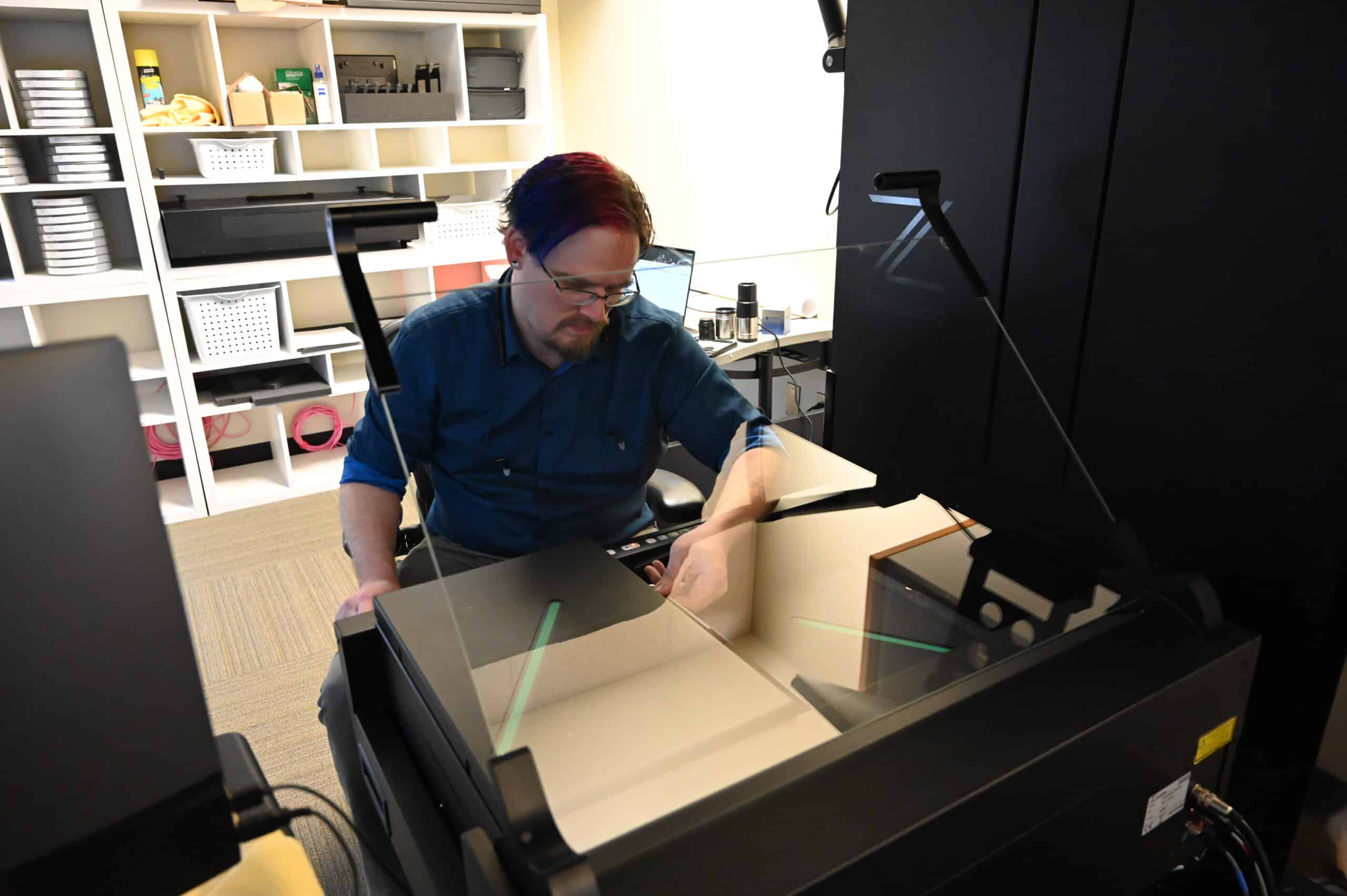
- Durable mechanical design: Equipment should be engineered for years of heavy use, with robust construction that resists wear and tear. Materials and moving parts must be selected for their ability to withstand repeated operation without loss of precision.
- Upgradeable firmware and software: As standards, file formats, and workflows evolve, so too should your hardware’s software. Systems that allow for firmware or software upgrades ensure continued compatibility and optimal performance.
- Continued parts availability: Replacement parts and consumables must be available for the equipment’s expected service life. This enables cost-effective repairs and avoids premature hardware obsolescence.
- Vendor stability: Work with manufacturers and vendors with a proven track record of supporting their products for the long term. A stable vendor will provide ongoing technical support, training, and access to critical updates.
- Backward compatibility with existing workflows: New hardware should integrate smoothly with your current processes, ensuring that upgrades do not require disruptive changes to established digitization or preservation practices.
Total Cost of Ownership vs. Initial Price
Budget pressures are real. While it can be tempting to choose the least expensive option, institutions should evaluate preservation decisions over a 5–10-year horizon, accounting for equipment’s lifecycle and total cost of ownership.
A lower-cost system that appears to save money up front may end up costing far more in the long run if it:
- Requires 10–15% rescans, wasting staff hours and exposing materials to unnecessary handling
- Produces inconsistent color, undermining the integrity of digital collections and requiring additional editing or remediation
- Introduces image artifacts, impacting the usability and credibility of the archive
- Demands frequent maintenance, resulting in unexpected downtime and additional service expenses
When evaluating true costs, it’s important to look beyond the sticker price. Consider the following:
- Labor and rescanning: Time spent correcting errors or repeating scans quickly adds up, both in salary and project delays
- Downtime: Equipment that is out of service disrupts workflows and can jeopardize project deadlines, grant compliance, or public commitments
- Image remediation: Correcting flawed images post-capture is time-consuming and often cannot fully restore lost quality
- Compliance risk: Inadequate systems may not meet FADGI, ISO, or other standards, putting accreditation or funding at risk
- Staff training: Frequent hardware replacements force teams to relearn systems, reducing efficiency and increasing onboarding costs
- Long-term service contracts: Hidden costs can accumulate if ongoing support or replacement parts are not included or become unavailable
Preservation-grade hardware, by contrast, is an investment in risk reduction. It minimizes hidden and downstream costs by delivering consistent, high-quality results, reliable operation, and long-term support—protecting both collections and institutional resources.
Matching the System to the Collection
There is no single “best scanner.” The ideal system matches your specific collection types, institutional goals, and workflows. Each class of material presents unique preservation challenges and requires a tailored approach to digitization hardware.
For example:
- Fragile bound volumes benefit from engineered overhead systems with controlled lighting, gentle book cradles, and flexible scanning angles. These features minimize stress on spines and bindings, allowing safe digitization of rare or deteriorating materials.
- Loose documents, manuscripts, and photographs are often best served by flatbed or planetary scanners that provide even support and minimize handling, reducing the risk of damage during capture.
- Fine art, halftone printing, and detailed engravings require true optical resolution—meaning the system’s actual resolving power, not just its interpolated pixel count. Hardware that avoids color interpolation and offers high-bit-depth color capture preserves subtle tonal variations and subtle details, essential for scholarly use and reproduction.
- Microfilm and microfiche demand specialized scanners with precise film transport mechanisms, consistent illumination, and advanced focusing systems to ensure accurate digitization of miniature or degraded originals.
- Oversized maps, architectural drawings, and posters call for wide-format scanners or overhead systems with adjustable imaging beds, enabling careful handling and full capture of materials that cannot be safely flattened.
- High-volume institutional projects require production-grade durability, automated feeding or batch processing, robust error handling, and measurable standards compliance to ensure efficient, consistent results at scale.
The central question is not simply, “Will this scan?” but rather, “Will this system maintain the integrity, accuracy, and accessibility of our collections for decades to come?” The right choice considers both the equipment’s technical capabilities and the organization’s long-term preservation needs.
Preservation-Grade Is an Institutional Promise
Choosing preservation-grade hardware is more than a purchasing decision. It is an institutional promise—a public declaration that your organization values access, authenticity, and stewardship not just for the present, but for the future.
This commitment stretches beyond technology and budget lines. It is a pledge:
- To researchers, who rely on accurate, high-quality digital surrogates for scholarship and discovery, trusting that the digital images they use are faithful to the originals.
- To regulatory bodies, whose requirements for standards compliance, security, and data integrity uphold the credibility and authority of your collections.
- To donors and stakeholders, who contribute resources and expect their gifts to be honored through responsible, forward-looking preservation practices.
- To future generations, for whom today’s digitization efforts will be the gateway to cultural memory, historical understanding, and creative inspiration.
Consistency protects image integrity, ensuring that what is captured today remains accurate and meaningful tomorrow. Reliability protects workflow continuity, keeping projects on track and minimizing costly interruptions. Longevity protects institutional investment, giving a foundation on which future projects and programs can build.
When selecting archival scanning equipment, approach it as a strategic investment in your organization’s mission. Choose systems that are built to measurable standards, validated in real production environments, and designed to adapt as your needs evolve. By making thoughtful, preservation-grade choices today, you safeguard the accessibility, usability, and trustworthiness of your collections for generations to come.
Because preservation isn’t about scanning for today—it is about building a bridge from the past to the future. Make the choice now to ensure tomorrow’s access remains secure.

Katherine is the marketing specialist at The Crowley Company. She is a passionate and dedicated professional who is always looking for ways to improve the company’s marketing efforts. When she’s not at work, Katherine loves to volunteer her time for various charitable causes. She is also an avid reader and enjoys exploring new destinations around the world, immersing herself in different cultures and experiences.