
Preserving Nitrate Film Archives with End-to-End Digitization
Motion picture film has documented some of the most important cultural, scientific and historical moments of the past century. But many of the earliest films, and countless photographic negatives, were created on a medium that presents preservation challenges: nitrate film.
Used widely from the late 19th century through the early 1950s, nitrate film offered excellent image quality but came with a major drawback. It is chemically unstable and highly flammable. Over time, nitrate film can deteriorate to the point where images are permanently lost.
For archives, libraries, museums and film preservation institutions, nitrate film digitization plays a critical role in protecting this vulnerable material. Digitization captures the image content before deterioration progresses further, enabling both long-term preservation workflows and broader access to historically significant materials.
Understanding the unique characteristics of nitrate film, and the best practices for digitizing it, is essential for organizations responsible for these collections.
What is Nitrate Film?
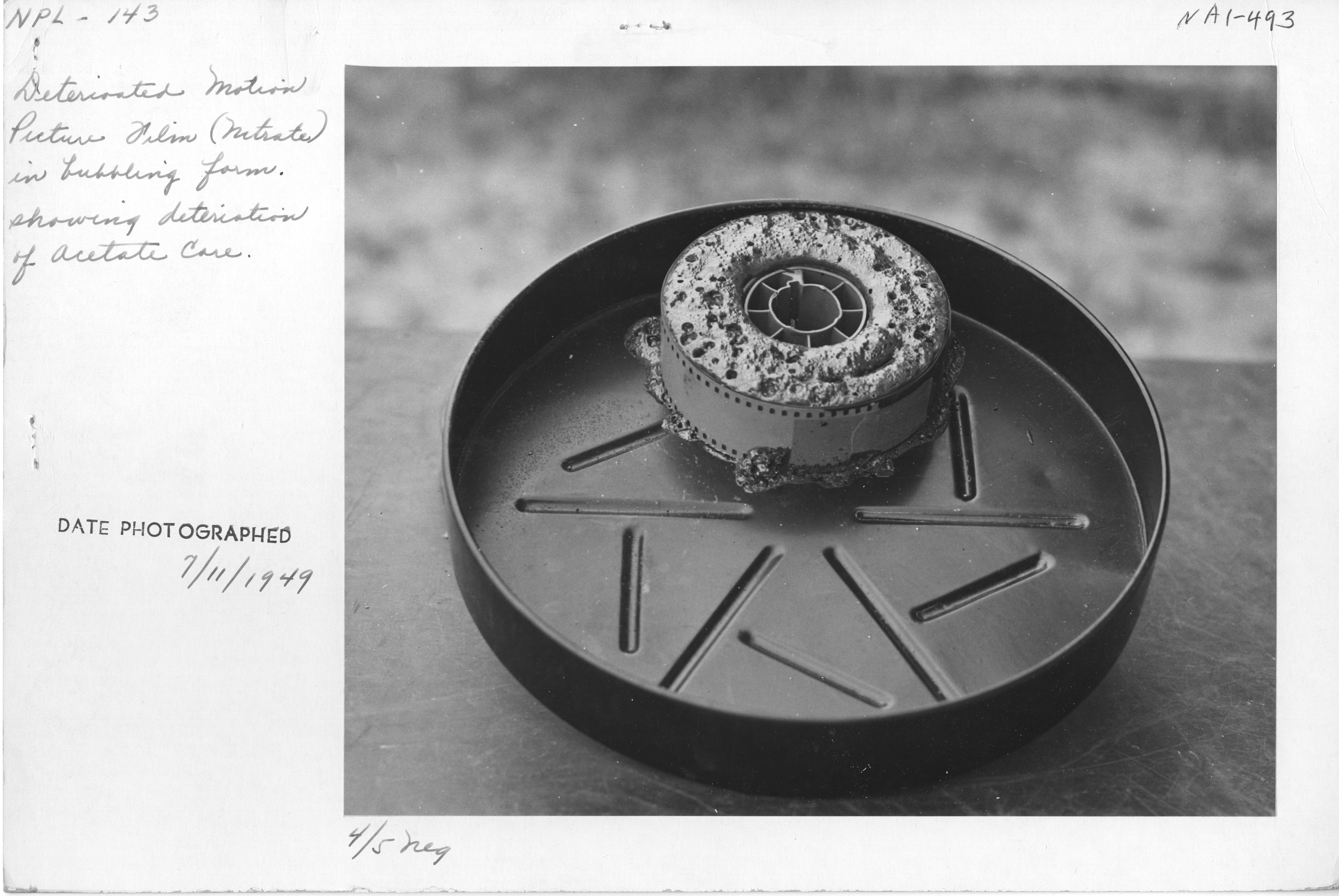
Nitrate film refers to photographic or motion picture film that uses a cellulose nitrate base. Introduced in the late 1800s, nitrate became the dominant film stock for motion pictures and still photography for decades.
The material was widely adopted because it had several desirable properties:
- Excellent image clarity and detail
- Strong yet flexible film base
- Suitable for both photography and motion picture production
Because of these qualities nitrate film was used extensively between 1889 and 1951, capturing early cinema, newsreels, government documentation, scientific research footage and historic photography.
However, nitrate film proved to be chemically unstable. Over time the film base can deteriorate, leading to shrinking, warping and eventual image loss. More importantly nitrate film is highly flammable which lead to the film industry replacing it with cellulose acetate, or “safety film”.
While nitrate film production and use ended in the mid-20th century, the material remains present in archives and collections around the world.
The Risks of Nitrate Film
Nitrate film presents two major preservation concerns: flammability and chemical deterioration.
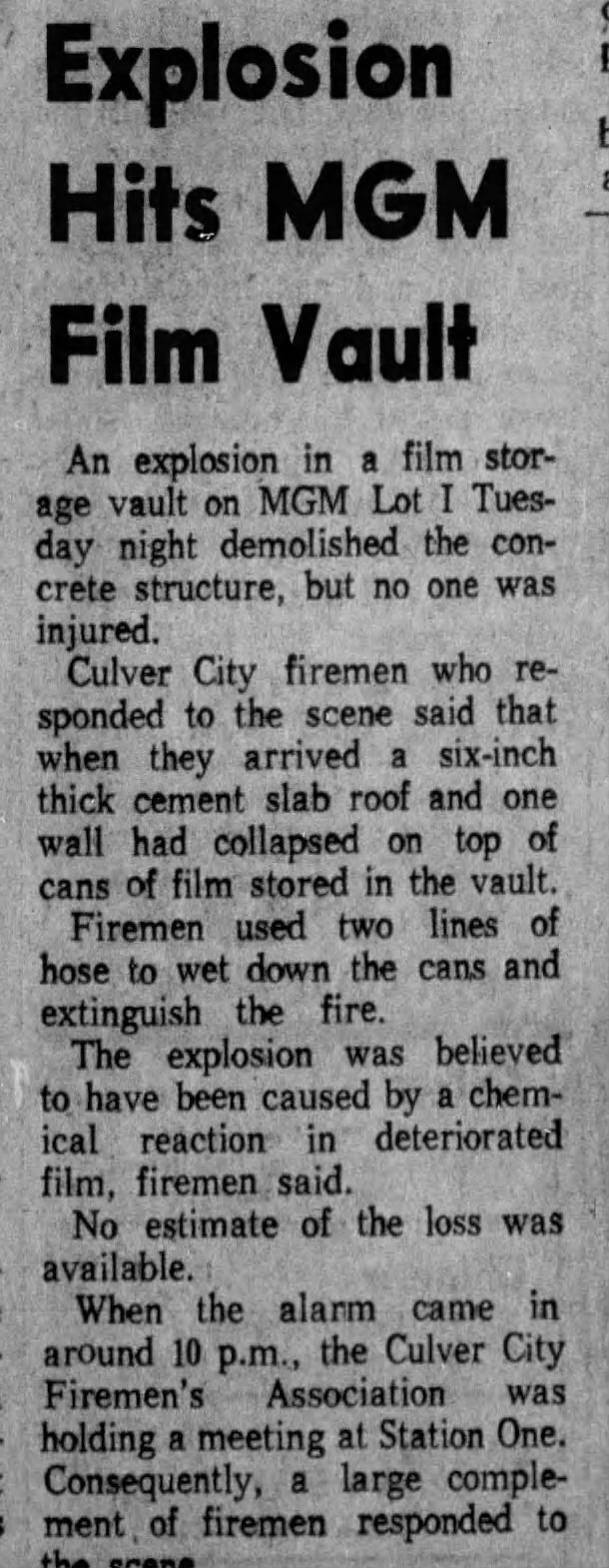
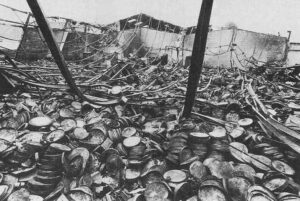
Unlike modern safety film, nitrate film can ignite easily, and nitrate fires are almost impossible to put out. The toxic gases produced by the burning of nitrate are lethal. There have been numerous nitrate film fires at archives over the years, like the devastating blaze at 20th Century Fox storage facility that consumed a significant portion of their silent films, or the catastrophic fire that destroyed 12 million feet of Universal News footage held by the National Archives and Records Administration.
In addition to fire risk, nitrate film undergoes chemical decomposition over time. As the film base breaks down the structure of the film becomes increasingly unstable and it gives off acidic by-products, nitric oxide and nitrogen dioxide. These acidic gases are deep lung irritants and repeated exposure may cause health issues.
Nitrate film deterioration is often described in stages, which include:
- Discoloration: Film begins to yellow or turn amber
- Stickiness: The emulsion layer softens or becomes tacky
- Warping or bubbling: Film loses its structural stability
- Powdering or complete breakdown: The film base disintegrates
Once deterioration reaches advanced stages, image information can become permanently lost and unrecoverable.
For institutions responsible for historical film collection, this means timely preservation is critical, and recognizing these signs early is key.
Why Digitization is Critical for Nitrate Preservation
Digitization plays an essential role in any preservation workflow but especially in preserving the content stored on nitrate film.
While proper storage in a cool, moderately humid, and well-ventilated area can slow deterioration and reduce safety risks that only helps with preserving the physical film not the information stored on the film. Film digitization ensures that the visual information survives even if the original material continues to degrade.
A well-executed nitrate film digitization program allows institutions to:
- Capture fragile images before deterioration progresses
- Reduce the need for handling delicate originals
- Enable digital restoration and enhancement workflows
- Provide safe digital access for researchers and the public
- Support long-term digital preservation strategies
Importantly, digitization does not replace physical preservation efforts. Instead, it complements archival storage by protecting the informational value of the material.
For many organizations, digitization represents a practical way to safeguard content stored on unstable nitrate film.
Challenges in Digitizing Nitrate Film
Although digitization offers clear preservation benefits, nitrate film introduces unique challenges during the scanning process.
Handling Fragile Materials
Aging nitrate film may exhibit:
- Shrinkage
- Warping
- Brittleness
- Weak or damaged perforations
Traditional film scanning systems that rely on aggressive film transport mechanisms can risk further damage. As a result, gentle film handling systems are essential.
Safety Requirements
Because nitrate films are flammable, institutions must consider safety protocols when working with these materials.
Best practices may include:
- Fire-safe storage and scanning environments
- Proper ventilation and environmental monitoring
- Handling procedures that minimize mechanical stress on the film
Some institutions also partner with specialized digitization providers, such as The Crowley Company, who are experienced in handling hazardous or unstable film formats.
Image Capture Considerations
Many nitrate films contain extremely fine image detail. Capturing this detail requires high-resolution scanning systems capable of preserving the full information content of the original film.
Digitization workflows must also account for issues such as:
- Film shrinkage affecting frame alignment
- Frame instability or jitter
- Physical damage or scratches on the film surface
Advanced film scanning technologies can help mitigate these challenges while preserving the integrity of the original material.
Best Practices for Institutions with Nitrate Film Collections
Organizations responsible for nitrate film collections can take several steps to improve preservation outcomes.
Identify Nitrate Materials
The first step is determining whether film materials are nitrate.
Common identification clues include:
- Assume that any film produced before 1920 is nitrate film.
- Check notch codes on the film edges. If the first notch (from the right) is a ‘V’ shape, it is most likely nitrate film. A ‘U’ shape indicates safety film.
- Look for signs of deterioration associated with nitrate film, such as odor and fragility.
Proper identification allows institutions to implement appropriate storage and handling procedures.
Store Film Under Controlled Conditions
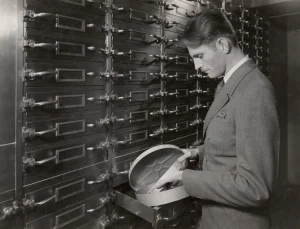
Nitrate film benefits from cool, dry storage environments designed to slow chemical deterioration.
Best practices include:
- Cold storage facilities
- Ventilated archival containers
- Segregation from acetate or polyester film stocks
Specialized nitrate vaults are often used by major film archives.
Prioritize Digitization
Because nitrate films continue to degrade over time, institutions should consider prioritizing digitization for:
- Materials showing early signs of deterioration
- Unique or irreplaceable historical content
- Frequently requested research materials
Early digitization efforts can prevent the permanent loss of important visual records.
Work with Experienced Digitization Providers
Nitrate film digitization requires specialized knowledge and equipment.
Experienced digitization solutions providers can offer:
- Film scanners designed for fragile or shrunken film
- Proper handling protocols
- High-resolution capture workflows
- Digital preservation expertise
These capabilities help ensure that valuable film materials are digitized safely and effectively.
A Full-Cycle Approach to Nitrate Film Digitization
Because nitrate films present both preservation and safety challenges, successful digitization requires more than just scanning equipment. Institutions must also consider secure storage, careful handling and responsible end-of-life management for the original film.
To address these complexities The Crowley Company Digitization Services offers a comprehensive end-to-end nitrate film digitization solution designed specifically for nitrate sheet film, photographic film and microfilm collections. This full-cycle service ensures that materials are handled safely while producing high quality digital surrogates suitable for long-term preservation and access.
Preparation and Safe Handling
Proper environmental control is essential for maintaining the stability of nitrate film prior to digitization. At Crowley, nitrate film is stored in our sub-zero freezers to slow chemical deterioration and maintain their condition before and after digitization.
Before digitization begins, the film is carefully conditioned to room temperature overnight. This controlled acclimation process helps prevent condensation and reduces stress on the film base during handling.
High-Resolution Scanning
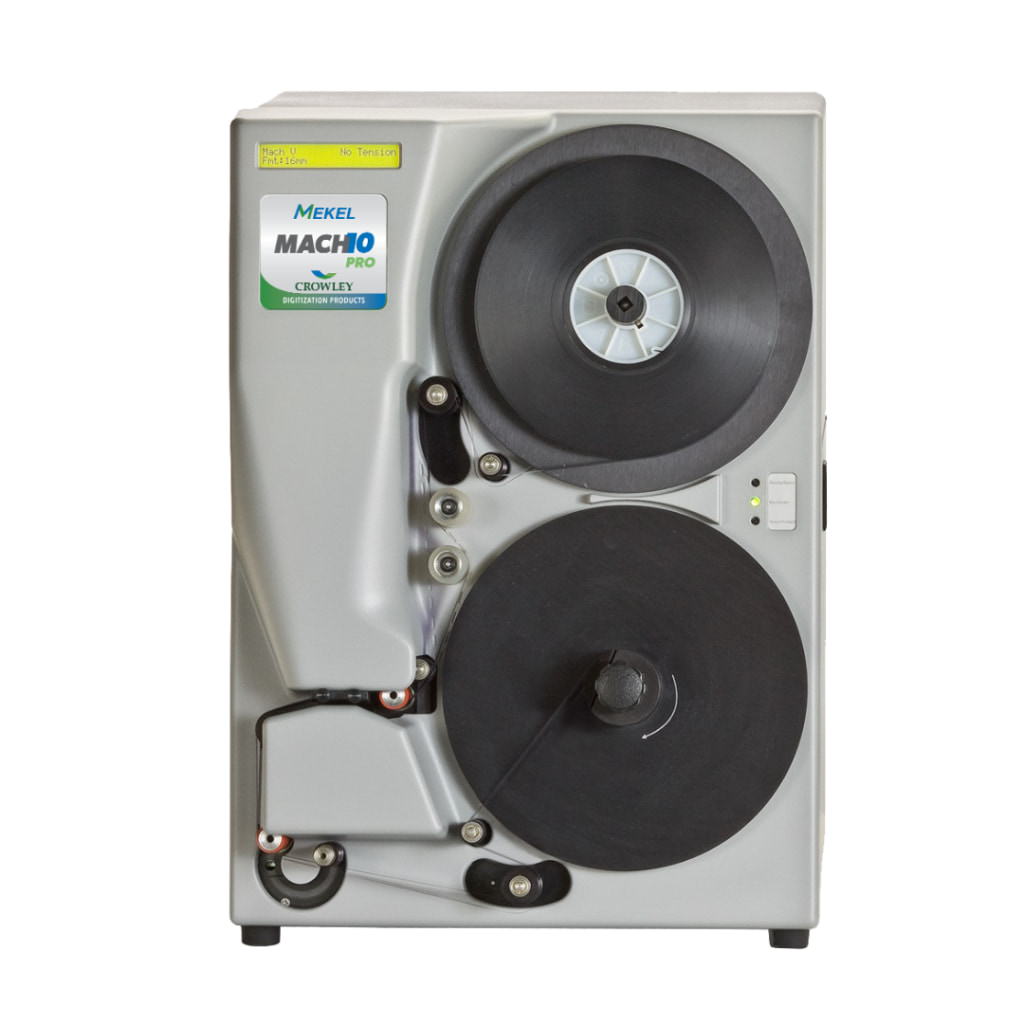
Digitization is performed using the Mekel MACH10 Pro production microfilm scanner, a system designed for high-resolution capture and gentle film transport, or our Crowley StillShot designed to meet the Library of Congress and the U.S. National Archives and Records Administration (NARA) handling requirements.
To ensure preservation-quality files Crowley scans nitrate film at:
- 2000 dpi for 16 mm and 35 mm film strips
- Up to 1500 dpi for 4×5 inch film sheets
- 400-600 dpi for microfilm reels
These high-resolution capture settings allow institutions to reserve fine image details while producing preservation-grade files that meet or exceed Library of Congress and NARA standards that support research, restoration and long-term archival storage.
Digital Preservation Storage
Once scanning is complete, the nitrate film is returned to our secure cold storage to maintain their stability while digital files undergo quality control.
Clients receive the digitized images for review and approval, ensuring that the final deliverables meet project expectations and standards.
Responsible Disposal of Nitrate Film
Because deteriorating nitrate film poses an ongoing safety risk, many institutions choose to responsibly dispose of the physical film once high-quality digital preservation copies have been created.
Upon client approval, Crowley manages the disposal process with strict safety protocols. The nitrate film is carefully transferred to a metal drum, immersed in a stabilization solution, and transported to our destruction partner.
The material is then incinerated at an ISO-certified facility in Ashton, Pennsylvania, ensuring safe and compliant destruction.
With Crowley’s full-cycle digitization service, you can trust that your nitrate film collections are safely preserved to the highest quality and responsibly managed.
Through this controlled process, institutions can confidently eliminate hazardous nitrate materials while preserving valuable historical content they contain.
With Crowley’s full-cycle nitrate film digitization service, organizations can ensure that fragile nitrate collections are handled safely, digitized to the highest quality standards and responsibly managed from start to finish.
The Case for Acting Now
Nitrate film represents a significant portion of early visual history, including historic cinema, scientific documentation, government records and cultural heritage collections.
Unfortunately, many nitrate materials are already in advanced stages of deterioration.
Without intervention, these films may eventually reach a point where digitization is no longer possible. Once the film base breaks down completely, the image information it contains is lost forever.
Digitization provides an opportunity to capture these images while they are still recoverable. In doing so, institutions can preserve not only the film itself but also the historical stories and knowledge embedded within it.
Author:
 Amanda Carrillo
Director of Marketing and Communications, The Crowley Company
Amanda is passionate and results-driven professional focused on continuously elevating marketing strategy and execution across the organization. Outside of work, she enjoys dancing, hiking, and spending time with family and friends. Amanda is a wine enthusiast and avid foodie who loves immersing herself in different cultures through excursions, food, and travel.