What Is Digital Preservation?
An Introduction to Long-Term Access, Authenticity, and Sustainability in Digitization Projects
Many people use the terms digital preservation and digitization as if they mean the same thing, but they are quite different. Scanning a document or converting film to a digital file is just the beginning. True digital preservation is what keeps that file accurate, accessible, and usable for years—sometimes decades—into the future.
For organizations that care for records, archives, or cultural heritage collections, digital preservation is essential. It is the foundation that protects the investment in digitization and ensures that digital assets retain their value over time.
What Is Digital Preservation?

Digital preservation is the active, ongoing management of digital content to ensure it remains accessible, usable, and authentic as technology changes and media ages. Today, the volume of digital information is growing faster than ever, fueled by new technologies and the rise of born-digital materials such as emails, databases, and electronic records. If you pause to consider it, much of our daily lives now happens in the digital world. This shift is exciting, but it also raises an important question: Are we truly preserving this information, or are we simply storing it and hoping for the best?
Simply storing digital files is not enough. Storage does not address the risks of outdated file formats, changing access needs, hardware failures, or data corruption. When we only store information, we risk losing it over time. Preservation requires a strategy. It means monitoring, planning for change, and putting the right technology, policies, and workflows in place. Only then can we be confident that our digital materials will last.
Why Digital Preservation Matters
It is easy to assume that once something is digital, it is safe forever. In reality, digital files can be just as fragile as paper or film. Files can become corrupt or unreadable as formats change. For example, Adobe files may need to be resaved each year as software updates, or they risk being lost. The risk of loss is not solely technical—it is also organizational.
Digital preservation supports:
- Continuity and compliance – Meeting legal, regulatory, and retention requirements.
- Institutional memory – Maintaining accurate historical and operational records.
- Public access and transparency – Ensuring materials remain discoverable and usable.
- Cultural stewardship – Protecting historically significant collections for future generations.
- Return on investment – Preserving the value of digitization efforts and equipment expenditures.
The Three Pillars of Digital Preservation
Successful digital preservation depends on three core principles: long-term access, authenticity, and sustainability.
Long-Term Access
Preservation keeps digital materials readable and accessible as technology evolves. This entails choosing stable file formats, keeping thorough metadata, and planning for migration or emulation as software and hardware change. Storing copies in multiple locations also helps protect against major loss.
Authenticity and Integrity
We trust digital records only if we can verify them. Good preservation practices include using checksums, performing fixity checks, using version control, and keeping extensive records of file origins. These steps help ensure that files have not been changed and that their history is clear.
Sustainability
Digital preservation is an ongoing commitment, not a one-off task. It calls for infrastructure that can grow, careful financial planning, and well-defined policies. Sustainable preservation means managing performance, cost, and environmental impact, while making sure collections can expand in size and complexity.
Digitization vs. Digital Preservation
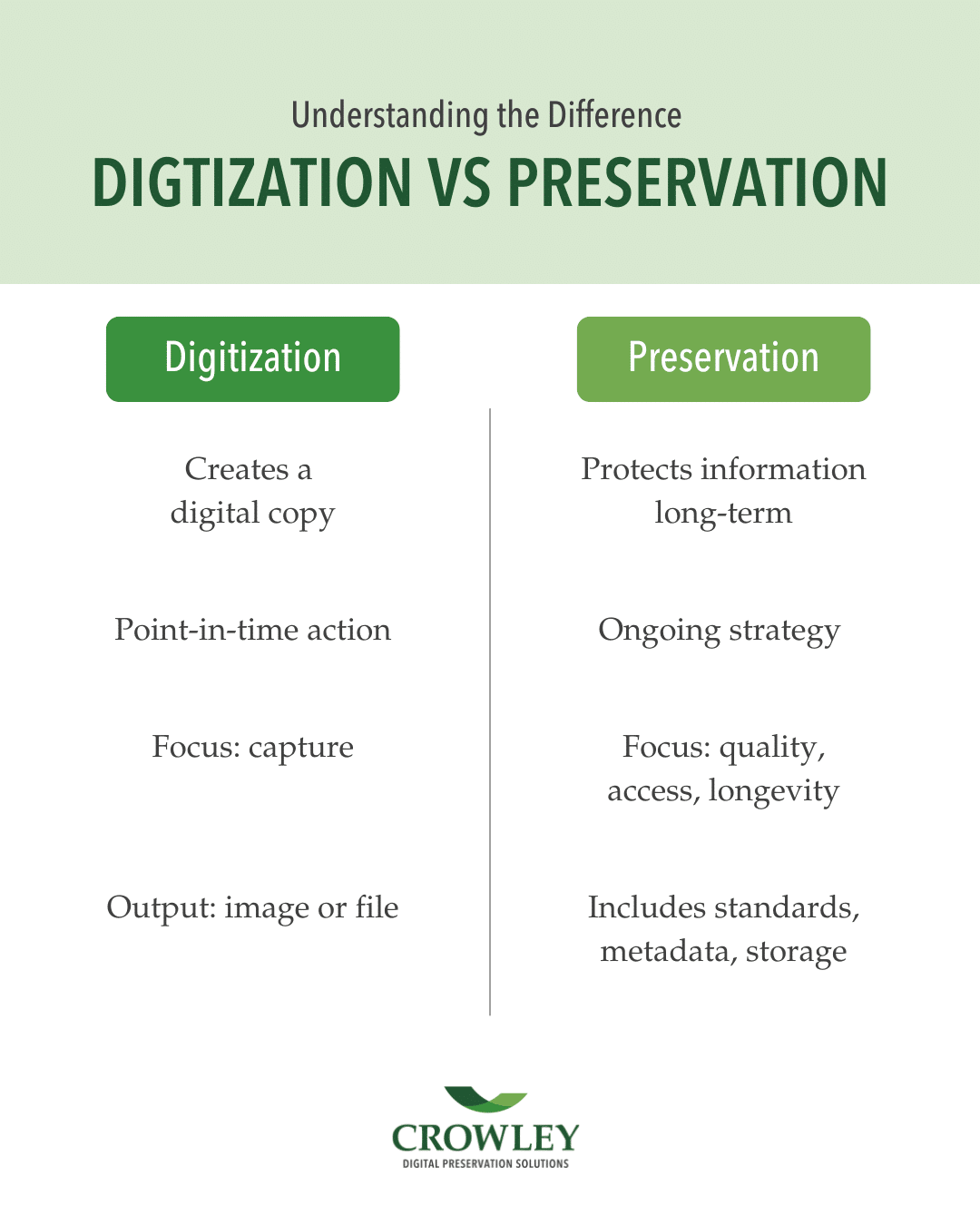
Digitization creates digital copies. Digital preservation is what maintains and protects those copies over time. Having one without the other puts your digital assets at risk. A high-quality scan can be lost without a preservation plan, and a robust preservation system without effective digitization results in unreliable content. The best results come when both are planned together. From the start, capture quality, metadata, storage, and access should all work in harmony.
Core Components of a Digital Preservation Strategy
Organizations implementing digital preservation typically establish:
- Policies and standards that define retention, access, and security requirements.
- File format guidelines that support open and well-documented formats.
- Metadata frameworks that support discovery and context.
- Backup and disaster recovery plans that address both physical and digital threats.
- Ongoing monitoring through audits and integrity checks.
- Access controls that balance usability with privacy and security needs.
Technology is important, but strong policies and clear processes make preservation consistent and reliable.
Common Challenges
Despite its importance, digital preservation can present hurdles:
- Budget and staffing limitations
- Rapid technology change
- Increasing data volumes and file diversity
- Balancing accessibility with data protection
- Maintaining internal expertise and training
Overcoming these challenges often means taking a step-by-step approach, building partnerships, and choosing hardware and software that are built to last. Leveraging partnerships with trusted technology providers like Preservica and Crowley can offer valuable resources and collaboration opportunities. Working with these experienced partners ensures access to state-of-the-art solutions and expertise.
Getting Started
For organizations just starting, a practical and steady approach to digital preservation works best:
- Conduct a preservation assessment of current assets and risks.
- Define well-defined policies and retention goals.
- Select stable, widely supported file formats.
- Implement routine integrity checks and backups.
- Plan for future migration before formats become obsolete.
- Work with experienced partners and proven technologies.
Looking Ahead
As digital collections grow, preservation will depend more on automation, standard workflows, and systems that work well together. Expectations for accountability, access, and transparency will also rise. Institutions that invest in reliable hardware, trusted software, and thoughtful planning will be ready to adapt to whatever unfolds next.
Digital preservation is more than just storing files. It is about making sure digital information stays accurate, accessible, and meaningful for years to come. With deliberate planning and the right tools, digitization projects can become lasting assets that preserve both our history and the future of information access.
Ready to preserve your collections? Click here to get started.

Katherine is the marketing specialist at The Crowley Company. She is a passionate and dedicated professional who is always looking for ways to improve the company’s marketing efforts. When she’s not at work, Katherine loves to volunteer her time for various charitable causes. She is also an avid reader and enjoys exploring new destinations around the world, immersing herself in different cultures and experiences.